Showing posts with label Retelling. Show all posts

Tuesday, November 29, 2016

Into the Forest

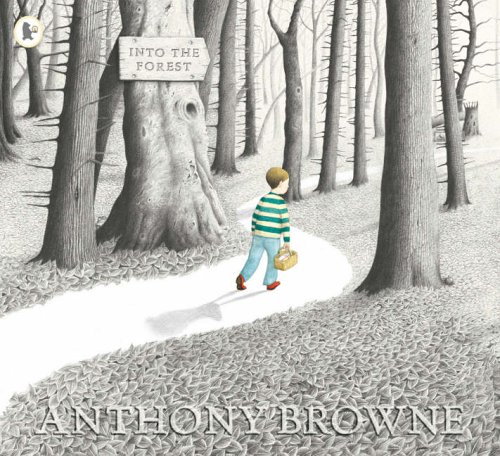
Image result for into the forest anthony browneBrowne, Anthony. (2004). Into the Forest. Cambridge, Massachusetts: Candlewick Press.
A young boy goes off, into the forest, to deliver a cake to his grandmother who lives there. Along the way, he meets lost souls in the forest and eventually becomes lost himself. But as he wanders, he finally finds his grandmother's cottage.

Connecting to the Standards
Grade 2 RL (7): Use information gained from the illustrations and words in a print or digital text to demonstrate understanding of its characters, setting, or plot.

  • The illustrations in the story are very detailed when it comes to explaining characters and setting of the story.

Grade 2 RL (9): Compare and contrast two or more versions of the same story (e.g., Cinderella stories) by different authors or from different cultures.

  • This story includes stories such as Goldilocks and the Three Bears, Jack and the Beanstalk, and elements of Little Red Riding Hood.

Grade 2 SL (1): Participate in collaborative conversations with diverse partners about grade 2 topics and texts with peers and adults in small and larger groups.

  • Students will discuss the illustrations in groups.
Adapted to the Classroom
Students will most likely already be familiar with the stories present within this book, so establishing prior knowledge will probably not be necessary. I would possibly pair this lesson with the other fairy-tale lessons presented in this blog such as Lon Po Po and The Three Pigs. 

The teacher will read the story aloud, possibly having the illustrations projected for students to see up close. Students should recognize some of the elements of other stories they see, either in the text or in the illustrations. The teacher might ask if they recognize the different characters and what stories they're from.

Once the reading is over, students will break up into small groups, each group getting a copy of the book. Students will be prompted to study the illustrations in conjunction with the text. Have students write down what fairy tales they see present in the story. Prompt them to look very closely at the illustrations, as some of the fairy tales are not as obvious as others. Students will share their findings with the class.

Bloom's Taxonomy
Distinguish what fairy tales are present in this story. (Analysis)
What story does the main character present? (Analysis)

Differentiation
Students who have trouble in small groups may need support, either by putting them with other students they work well with or by having the teacher standing by ready to give support to the student and redirect their behavior.

Monday, November 28, 2016

Henry and Mudge: In the Green Time

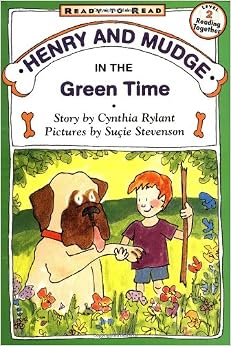
Rylant, Cynthia. Henry and Mudge In The Green Time. (1987). Stevenson Sucie (Illus.).
     New York, New York: Bradbury Press

Image result for henry and mudge in the green time summaryThis adventure of Henry and Mudge takes place in the summer and all the things they can do on green grass. They have a picnic on the grass in the park where Henry gets stung by a bee but Mudge cheers him up. They play with the water hose out on the green lawn to give Mudge a bath that he does not like, so he gets Henry back soaking him when he shakes all the water off. Finally Henry and Mudge head up a hill where they let there magic imaginations unleash and eventually get worn out and fall asleep under the tree.

Connecting to the Standards
Grade 2 RL (1): Ask and answer such questions as who, what, where, when, why, and how to demonstrate understanding of key details in text
  • This story allows student to answer a questions about what Henry and Mudge
     do when they are in the 3 different chapter. 
Grade 2 W (3): Write narratives in which they recount a well-elaborated event or short sequence of events, include details to describe actions, thoughts, and feelings, use temporal words to signal event order and provide a sense of closure
  • This story allows students to meet this standard because they can write about the different events in each of the 3 different chapters.

Learning Outcomes
Students will answer the question, "Which Henry and Mudge story was your favorite and why, and who is your favorite character and why?" citing the text twice with 80% accuracy

Adapted to the Classroom 
After reading the text as a class we would discuss what happened in each story. While discussing we would write down a class summary of each text and events we think to be important. It is at this point that I would ask questions to help the children. Through this discussion I would make sure that each students have a good understanding as to what happened in each story. Once student's understanding have been checked, I would then dismiss students to answer the overall question. It is at this time that students would answer the question "Which Henry and Mudge story was your favorite and why?" and "Who is your favorite character and why?"

Once students have completed this text as a class we would then create a graph to see which story was the class favorite and which character was the class favorite.

Bloom's Taxonomy
Who are the main characters in our story? (Knowledge)
 If you were Mudge, how would you solve the problem of not wanted to take a bath? (Application)
Suppose you could have a magical place like Henry and Mudge, what would do when you are at your magical place? (Synthesis)

Differentiation 
For students who are not able to write, we would make sure that they have access to assistive technology that would allow them to type out their answer to the questions.
For students who are gifted we would take the questions one step further to make sure that they are stilling being challenged

Sunday, November 27, 2016

Lon Po Po

Young, Ed. (1989). Lon Po Po. New York, New York: Philomel Books.

This retelling of the classic Little Red Riding Hood flips the story on its head by bringing the wolf to the children. At first, the children believe that the wolf is, in fact, their grandmother. But as they soon realize, they set out a plan to get rid of the wolf.

Connecting to the Standards
Grade 2 RL (2): Recount stories, including fables and folktales from diverse cultures, and determine their central message, lesson, or moral.

  • Students will recognize that this is a version of a story from a different culture and uses unique names and vocabulary.

Grade 2 RL (3): Describe how characters in a story respond to major events and challenges.

  • As the story progresses, the views of the students change as they come to realize their Po Po is actually a wolf in disguise.

Grade 2 RL (9): Compare and contrast two or more versions of the same story (e.g., Cinderella stories) by different authors or from different cultures

  • Students will take what they know about the original story of Little Red Riding Hood and compare/contrast it with Lon Po Po. 

Grade 2 SL (1): Participate in collaborative conversations with diverse partners about grade 2 topics and texts with peers and adults in small and larger groups.

  • Students will create a Venn diagram or T-chart to compare and contrast the two versions of the same tale.
Learning Outcomes
Students will be able to continue to understand how to compare and contrast elements of stories that have similar tropes and devices. In this case, the big familiar trope is the "big, bad wolf." They will understand how the characters respond to the discovery of the wolf and how their actions lead, ultimately, to its death. Students will engage in a compare/contrast activity using the original story and Lon Po Po. They will be able to put their findings into a Venn diagram. 

Adapted to the Classroom
This book/activity can be paired with the "The Three Pigs"  lesson from our blog. 

Starting out, the original version of the story should be established with the students to give them a base story to compare Lon Po Po with. Attention should be given to important details of the story, especially those that connect with the elements in Lon Po Po. Students should have the chance to discuss what they believe are the most important elements of the story.

Once that is established, a read-aloud of Lon Po Po should follow, probably the next day. Students will, once again, discuss the important elements of the book. They will then break up into small groups and create a Venn diagram presenting the differences between the two stories. These Venn diagrams will then be posted around the classroom for students to view.

Bloom's Taxonomy
How does the original story compare/contrast with Lon Po Po? (Analysis)
What differences exist between the two stories? (Comprehension)

Differentiation
To give students with exceptionalities support, put them in groups with students a) they work well with, b) who will be supportive and helpful, and c) who will encourage them to be a part of the group and succeed. If students are having trouble succeeding in their group, stay close to the group and see what additional support you can give to the student.

The Three Pigs

Image result for the three pigs david wiesnerWiesner, David. (2001). The Three Pigs. New York, New York: Houghton Mifflin Company.

Taking The Three Pigs to new heights and new places, this unpredictable retelling of the classic story will delight children's imaginations. The three brothers wander from the own story, admittedly leaving the wolf a little baffled, and pick up eccentric characters from different tales. '

Connecting to the Standards
Grade 2 RL (9): Compare and contrast two or more versions of the same story (e.g., Cinderella stories) by different authors or from different cultures.

  • This story provides students with a different version of the familiar story, The Three Little Pigs.

Grade 2 W (3): Write narratives in which they recount a well-elaborated event or short sequence of events, include details to describe actions, thoughts, and feelings, use temporal words to signal event order, and provide a sense of closure.

  • Students will do a creative writing exercise using the same conventions in The Three Pigs, but will have the chance to use the characters in their favorite books to tell the story.

Grade 2 L (2): Demonstrate command of the conventions of standard English capitalization, punctuation, and spelling when writing.

  • Students will write their own narrative and will demonstrate mastery over these conventions through their writing.
Learning Outcomes
From this reading and subsequent activity, students will gain an understanding of comparing and contrasting two similar stories. Over the course of the year, students will continue to read different versions of familiar and similar stories. Students will then use this understanding of differing stories to write a narrative based off a story they are familiar with, using similar storytelling devices to The Three Pigs. Through the writing of this narrative, students will demonstrate their command over writing conventions including "capitalization, punctuation, and spelling..."

The final product, the written narrative, plus any previous rough drafts will be used to show progress towards the standards. Students will have multiple chances to revise and edit their narrative as they work their way through the writing process.

Adapted to the Classroom
Before reading The Three Pigs by David Wiesner, the class will participate in reading other versions of the The Three Little Pigs. Prior to that, it may be a good idea to also introduce other tales and different versions of them to get students used to the idea that storytelling is an art and a story may change based off of who is presenting the story.

Once the book is read, in a teacher-guided read aloud, students will have the chance to discuss the differences in this version of the story to past versions. This discussion will be mostly student-led, but the teacher will most likely need to guide the discussion if it becomes stagnant. Once students have an understanding of the storytelling devices used in The Three Pigs, they will have a chance to go to the library to pick out a book they are familiar with or want to become familiar with. The teacher should also provide more books for students to use who are having trouble deciding what story to use.

Students will then engage in a creative writing exercise that will most likely span over 4-5 days. Students will start with a rough draft of their favorite story, that should follow the devices used in The Three Pigs, such as characters escaping the story, duping the main villain in clever ways, or meeting characters from other stories along the way. Over the course of the next few days, students will have time to revise and edit their stories until they are left with a final draft that they submit. It would be fun for the teacher to put these stories into a classroom collection, either in book form or online for parents to view. 

Bloom's Taxonomy
Who are the main characters in your narrative? (Knowledge)
What differences exist between the original story and this retelling? (Comprehension)
How would you create a new ending for your story? (Synthesis)
What might happen if you combined this story with this other one? (Synthesis)

Differentiation
Because this project involves a lot of reading and writing, the main concern would be with students with disabilities that affect their ability to read and write such as students with dyslexia. Additional support should be provided to these students and possibly include one-on-one sessions with these students to check their progress. Additional supports could be put in place to make sure they succeed such as having a dictionary nearby for students to refer to (this could be done for any student) or having technology that is meant to support students with dyslexia or other language disorders.