Showing posts with label Research. Show all posts

Monday, November 28, 2016

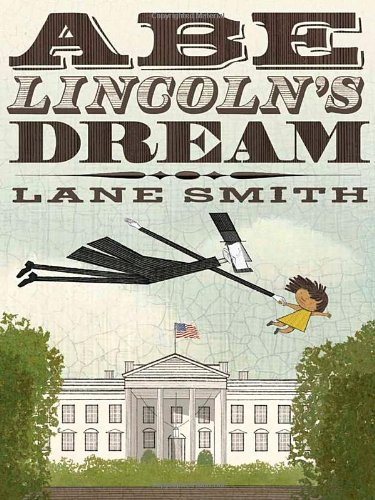
Abe Lincoln's Dream

Image result for abe lincolns dreamSmith, Lane. (2012). Abe Lincoln's Dream. New York, New York: Roaring Book Press

The ghost of Abe Lincoln keeps coming back every year because he can't rest until he knows the fate of the nation. A nice young lady on a tour of the White House helps to show him what has happened since he passed. She takes him across DC and even to the moon to show him how far the U.S. has come, but also how far we can go.

Connecting to the Standard
Grade 3 RI (1): Ask and answer questions to demonstrate understanding of a text, referring explicitly to the text as the basis for the answer

Grade 3 RI (2): Determine the main idea of a text; recount the key details and explain how they support the main idea.

Grade 3 RI (3): Describe the relationship between a series of historical events, scientific ideas or concepts, or steps in technical procedures in a text, using language that pertains to time, sequence, and cause/effect.

Grade 3 W (2): Write informative/explanatory texts to examine a topic and convey ideas and information clearly. a. Introduce a topic and group related information together; include illustrations when useful to aiding comprehension. b. Develop the topic with facts, definitions, and details. c. Use linking words and phrases (e.g., also, another, and, more, but) to connect ideas within categories of information. d. Provide a concluding statement or section.

  • Though this text is not necessarily non-fiction, it does have informative parts to it, mostly about US history. 
Learning Objectives
Students will learn how to understand an historical fiction book that is informative and how to engage in research on the topics introduced in the story. Students will be able to research using a variety of resources including internet, library, etc. Students will also learn to use word-processing applications to create their informative writing.

Adapted to the Classroom
This lesson will also incorporate some Social Studies/History standards.

After doing a teacher-guided classroom read, students will engage in a research process on the changes that have occurred in the social and political landscape of the country since the time of Abraham Lincoln's passing. Why might Lincoln be happy with changes that have been made based off of the progress he started making during his presidency? Students should choose one topic to write on and be able to explain and support their reasons behind why the progress they chose would make President Lincoln happy. Students will present their findings in an essay which will be written using a word-processing application on the computer. 

Bloom's Taxonomy
What is the main idea of the story? (Comprehension)
Why are the things shown by the little girl significant? (Application)
Choose a topic of progress and support your reasoning why President Lincoln would be happy with it. (Evaluation)

Differentiation
Giving students who struggle with research and writing extra support is important during this assignment. It may be helpful to have individual meetings with students to check their progress over the course of the research process and writing process.

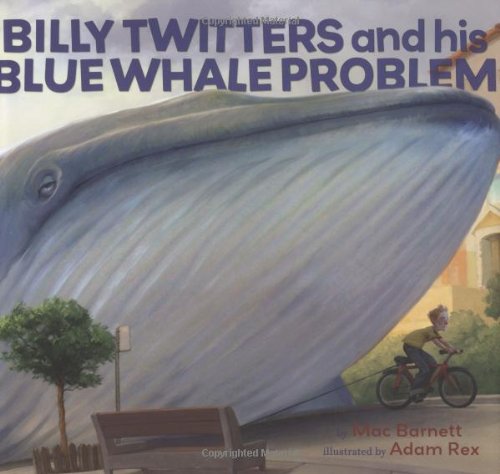
Billy Twitters and his Blue Whale Problem

Barnett, Mack. Billy Twitters and his Blue Whale Problem (2009). Rex, Adam (Illus.). New York, New York, Disney-Hyperion

Image result for billy twitters and the blue whale problem publisherBilly never believed his parents when they would say "Billy you need to do this or we will buy you a blue whale." Until one day his parents actually bought him a whale. After this Billy is forced to take care of the whale, and begins that having a whale for a pet is not as fun as it sounds.

Connecting to the Standards
Grade 2 L (2): Demonstrate command of the conventions of standard English capitalization, punctuation, and spelling when writing. B: Use commas in greetings and closing of letters
  •  Students will meet this standard by writing a letter asking for a whale using the correct letter format.
Grade 2 L (3): Use knowledge of language and its conventions when writing, speaking, reading, or listening
  • Students will meet this standard by writing a letter asking for a whale, in their letters they will have to use the English language correctly to make sure they ask for their whale correctly.
Learning Outcomes 
After discussing the components of a letter, students will write a letter requesting a whale with 80% accuracy.

Adapted to the Classroom 
During our pre-reading this text, students will be given a chance to physically look at this book. While students are looking this text will be giving the chance to find the spot where is says they can send for a whale. Prior to reading we will also do some research about whales and learn about whales.

While reading the text, we will use some during reading skills. We will make connections to information we already know about whales and new learning. While reading we will also go over new vocabulary words that come up

After reading, I will ask students if they found anything interesting in the book. Through the use of scaffolding I will lead them to get to the point about sending for a whale. After they discover this, we will discuss letters, how to write them, and what a letter is. It is at this point I will give students a chance to draft a letter asking for a whale. Once we have received our whales we will write letters to our whales each month and students will be given a chance to call their whale as well.

Bloom's Taxonomy 
Suppose you were in Billy's shoes, how would you have reacted to receiving a whale? (Synthesis)
What would have resulted if Billy would have listen to his parents in the beginning? (Application)

Differentiation
For students with Dyslexia, they will be able to use technology to help them write their letters asking for a whale.  
For students who are finished early, they will be given the chance to do a work sheet with questions about whales on it.

So You Want to be President

St. George, Judith. So You Want to be President (2000). Small, David (Illus.). New York, New York: Philomel Books

Image result for so you want to be presidentIn this text you learn all the positives and all the negatives that come with being President of the United States. While learning about the positives and the negatives, you also learn a little about each President. Not only do you learn fun facts about each President but you also learn fun facts about all the Presidents, like how many were born in long cabins and how many have the same name.

Connecting to Standards
Grade 2 W (7): Participate in shared research and writing projects (e.g. read a number of books on a single topic to produce a report; record science observations)
  • This content standard is met by the students getting into groups and doing research on the description of the president and having to report back to the class 
Grade 2 W (2): Write informative/ explanatory texts in which they introduce a topic, use facts and definitions to develop points, and provide a concluding statement or section.
  • This content standard is met by the students having to write paragraphs about one President of their choice. These paragraphs will be comprised on the information they found when doing research on the President of their choice
Learning Outcomes
After reading this text, students will pick a President to research and will write a paragraph biography about said President with 80% accuracy.

Adapted to Classroom
Prior to reading this text we would discuss the different Presidents of the United States. While discussing the Presidents we would make a time line so that students can visually see when the Presidents where President. While we are making a timeline we would discuss each President, whether that be by watching a video, reading a book, or doing some class research together on said President. During this discussion we would do some class research about the job's the President has, requirements to be President, and just overall important information regarding the President. This research would be done by having students break into groups and pick different categories of information to research on the President

After priming the students with all the information we would read this text. While reading this text we would start by taking a tally of how many students say "yes" or say "no" for wanting to be president. While we are reading the text we would make connections to the research that the students did.

After the read aloud is finished we would retake our poll and see who still wants to be president and who does not want to be President. After taking this poll we would discuss what we read in the text. While discussing this would be when I introduce the project to the children. For the project each student would research one particular President. They would answer research questions and would write a paragraph about the President they picked. These paragraphs would then be hung in the hall with a picture the student picked. 

Bloom's Taxonomy 
What is the name of the house the President lives in? (Knowledge)
In your opinion what is the best thing about the President you researched? (Evaluation) 

Differentiation
One way to differentiated this lesson is by allowing students to work in partners. This will allow students who are ELL or with SPED services to receive extra help from their classmate.
For students who are gifted you can require extra questions for them to answer forcing them to go in depth with research. 

Saturday, November 26, 2016

John, Paul, George, & Ben

Image result for john paul george and ben by lane smithSmith, Lane. (2006). John, Paul, George & Ben. New York, New York: Hyperion Books.

Laced with historical humor, this book is a (mostly) accurate telling of the events leading to the American Revolution and the men involved. It shows how the five men, John Hancock, Paul Revere, George Washington, Ben Franklin, and Thomas Jefferson, acted when they were children and how that behavior led to their bravery and ingenuity as adults.

Connecting to the Standards
Grade 2 RL (1): Ask and answer such questions as who, what, where, when, why, and how to demonstrate understanding of key details in a text

  • .The books main characters are familiar historical figures and the book does a good job of differentiating each character and what part they play in the story. Students will be able to recognize at least who they are, what they did, when they lived, and how they effected the outcome of the story.

Grade 3 RL (3): Describe characters in a story (e.g., their traits, motivations, or feelings) and explain how their actions contribute to the sequence of events.

  • Through a little more research, students will be able to understand and describe each character including their behaviors and their individual personalities. They will also be able to explain the effect they cause through their actions.

Grade 2 W (7): Participate in shared research and writing projects (e.g., read a number of books on a single topic to produce a report; record science observations).

  • Students will participate in a group project exploring one of the five characters in the books in more detail. 

Grade 3 W (7): Conduct short research projects that build knowledge about a topic.

  • Students will participate in a group project that researches in detail the lives of one of the five characters from the book.

Grade 2 SL (1): Participate in collaborative conversations with diverse partners about grade 2 topics and texts with peers and adults in small and larger groups.

  • Students will discuss, in small groups, the cause-and-effect shown in this story, the characters of the story, and how it connects to previous discussions on the American Revolution.

Grade 2 SL (2): Recount or describe key ideas or details from a text read aloud or information presented orally or through other media.

  • Students will present their findings from their research project to the classroom in a group effort.
Learning Outcomes
By the end of this lesson, students will have, at least, a basic understanding of cause-and-effect and will be able to explain how cause leads to effect. Students will be able to set out to research any topic using various resources. Students will be able to effectively collaborate with group partners to implement and execute a research plan. Students will be able to present their research findings clearly and effectively to the classroom.

Adapted to the Classroom
First off, it is important to establish some background knowledge on the American Revolution and, in particular, the five people mentioned in the book. Students will watch informational videos, read about the war, and talk about what they know about the American Revolution.

Once students are familiar with the Revolution, I would read the book in a teacher-guided read-aloud. Students should be able to make connections to what they know to what they hear during the reading. They will be encouraged to raise their hands and ask questions or make comments (within the boundaries of the rules).

Students will then engage in a project with small groups of 5 or 6 to research one of the individuals from the story. They will learn to work as a team by doing group research and assembling a presentation together. Students will use a variety of resources to research including internet, informational texts, historical accounts, etc. Finally, students will present the information they've accumulated to the class.

Bloom's Taxonomy
Who, what, when, where, and how. (Knowledge)
Why is _______ significant? (Application)
Outline (Analysis)
What is most important? (Evaluation)

Differentiation
Because this lesson does have a lot of research involved, a lot of support should come from the teacher. This may be one of the first time students engage in a large amount of research and may not know exactly where to look, giving the teacher an opportunity to establish a scaffold. Once students have enough knowledge on research, the scaffold can be slowly removed. SPED students can still participate in this project and should be paired with traditional students who can give them some additional support.